
Electrical Systems Engineering
Master of Engineering
Work on cutting-edge technology in electronics, power systems & IT with practical projects, flexible electives and international options.
Key Information
Programme Overview
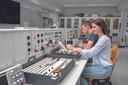
The degree of Master in Electrical Systems Engineering defines itself as an interdisciplinary field of work involving the fields of electronics, electrical engineering, information technology and informatics. In the subject areas of circuit design, power electronics, microcontrollers, image processing and electrical drives you will be working on the key technologies of the future. Small teams of students tackle work on specific tasks from industry. The tasks can be of a constructive, experimental or theoretical nature. The wide range of elective subjects and the option to take elective subjects of other faculties or universities (including from abroad) will provide you with a well-rounded professional profile.
Programme Profiles
The degree programme can be completed with one of four different course profiles:
You will automatically be assigned to this profile after enrollment. See below for the course of study.
In the Development Management programme profile you will study economics and business administration subjects in addition to your engineering education. You can apply with a letter of motivation to the Programme Dean for the Development Management programme profile from the time you are admitted to the programme until the end of the third week after the start of lectures.
You can choose the International programme profile if you complete at least 20 ECTS credits at a university abroad. You will not work on a master's project in this profile. It is also possible to obtain a double degree with a foreign university.
Would you like to work intensively on an interesting and current research project and publish your results? We can support you here! The Research programme profile gives you the opportunity to do just that. It is also possible to obtain a double degree with a foreign university. This course profile can be studied in English!
As part of the 'International' and 'Research' programme profiles, it is possible to obtain a double degree in collaboration with UTHM in Malaysia. Upon successful completion of your studies, you will then hold both a German and a Malaysian master's degree. For further information on the double degree, please contact Prof. Dr.-Ing. Uwe Gleiter (uwe.gleiter@hs-heilbronn.de).
Careers: What career prospects will I have with a Master´s degree?
Graduation – and what next?
Electrical engineering is one of the key technologies of our time. Whether it’s the energy transition, digitalisation, automation, electromobility, artificial intelligence or communications technology – innovative solutions emerge wherever electrical and electronic systems are developed, networked and intelligently controlled.
The Master’s programme deepens your technical and methodological skills and equips you to analyse complex technical challenges independently and develop innovative solutions. You will learn to design challenging development projects, take on technical responsibility and collaborate successfully in interdisciplinary and international teams.
A Master’s degree opens up excellent career prospects in industry, research and the civil service. Potential areas of employment include energy supply, automation and drive technology, information and communication technology, the automotive industry, medical technology, and mechanical and plant engineering. In addition to demanding specialist careers, you will also be qualified for project management and leadership roles.
Furthermore, the Master’s degree opens the door to academic careers in research and development, right through to a PhD. As such, this qualification provides you with the ideal foundation to actively drive technological innovation and help shape the challenges of the future.
Programme Structure - e.g. Profile 'Engineering'
- 1st Semester
- 2nd Semester
- 3rd Semester
- Study Abroad
- Documents
- Statistical Methods
- Selected Topics of Mathematics
- Engineering Project
- Elective subjects
- Autonomous systems: Deep learning
- Autonomous systems: Path planning and control
- Autonomous systems: Perception and situation understanding
- Advanced Suspension Systems
- Industrial Processes in Materials Engineering
- Lightweight Car Body Engineering
- Optical Sensors
- Numerical Methods and Optimization
- Design of Experiments
You will be able to practically apply this knowledge in your engineering project. Small teams of students tackle work on specific tasks from the industry. The tasks can be of a constructive, experimental or theoretical nature.
The wide range of elective subjects (see module handbook) and the option to take elective subjects of other faculties or universities (including from abroad) will provide you with a well-rounded professional profile.
- Design of Experiments
- Numerical and Optimization Methods
- Engineering Project with Colloquium
- Elective subjects
- Autonomous systems: Deep learning
- Autonomous systems: Path planning and control
- Autonomous systems: Perception and situation understanding
- Advanced Suspension Systems
- Industrial Processes in Materials Engineering
- Lightweight Car Body Engineering
- Optical Sensors
- Numerical Methods and Optimization
- Design of Experiments
- Computer and Robot Vision
- Autonomous Systems: Architecture and Planning
- Digital Singal Processing and Pattern Recognition
- Exhaust (gas) treatment
You will be able to practically apply this knowledge in your engineering project. Students work in small teams on specific tasks from industry. The tasks can be of a constructive, experimental, or theoretical nature.
The wide range of elective courses (see module handbook) and the opportunity to take elective courses from other faculties or universities (including those abroad) round off your academic profile.
Master’s thesis with colloquium (30 ECTS)
You will undertake this either in a laboratory of Heilbronn University of Applied Sciences or in collaboration with the industry.
Are you interested in studying abroad during your degree programme? Detailed information on semesters abroad, partner universities, contact persons and scholarships can be found here: Studium im Ausland or here: Bewerbung für ein Auslandssemester
Requirements and Application
Before applying to Heilbronn University, non-German Bachelor degrees need to be declared equivalent to a German first degree. Therefore, please fill in the below form "Application for Recognition of Certificate" as well as the necessary documents also mentioned below, or an equivalent certificate issued by Studienkolleg Konstanz or UniAssist.
Please note: Requirements of the Bachelor's degree for admission to the master's programme are
- a grade of 2.5 or better (German grading scale)
- 210 ECTS credits (see page 10 in the ECTS User's Guide for more information) - at least, however, 180 ECTS (conditions for acceptance do apply)
- comparable first degree with a predominant engineering component of at least 50%.
- for studies in German at least level B2
- for studies in English (research profile) at least level B2
The entry requirements in German also apply to Incomings (Erasmus+, Global, Freemover). However, we also offer and recommend appr. 30 ECTS lectures in English language that you can attend.
Application for Recognition of Certificate
Please fill in this form
In addition to the filled in form, please submit the following documents
- Curriculum vitae
- Bachelor's certificate and transcript of records in German or English
- Proof of your English language skills
- Proof of your German language skills, if applicable
- APS certificate, if applicable
via e-mail to:
Contact

Is this degree programme right for me?
Studying at HHN
- Information for Degree Seekings
- Why Heilbronn?
- My Campus
- Student Life & Service
- Tips for a Successful Start
- ProfiPlus Qualification Programme

Information for Degree Seekings

Studying in Heilbron? Absolutely!
Shopping, restaurants, cafés, bars, clubs, the River Neckar, the parks, the vineyards... There are plenty of good reasons to study in Heilbronn. On the City of Heilbronn website, you´ll find tips and information on student life and leisure activities in Heilbronn:
Study at TechCampus
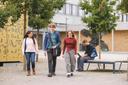
A campus for engineering and computer science! The TechCampus in the south of Heilbronn offers plenty of space for research: technical test benches, a logistics hall, a cleanroom, our virtual reality laboratory and numerous laboratories for the degree programmes. The HHN conducts research across disciplinary boundaries into exciting topcis for the future. But there´s also plenty on offer for those who just want to clear their heads now and then: Whether it´s the beach volleyball court or the calisthenics park - the campus is spacious and offers plenty of opportunities for outdoor activities.

Student Life & Service
Our advisors will be happy to answer any specific questions you may have during your studies.
- Services for degree seeking students: International Career Service, International Student Support and Central Student Advisory Office
- Student dormitories around campus, free extracurricular courses and scholarship opportunities
- Student exchange programmes with around 200 partner universities from all over the world

Tips for a successful start
Start your studies well prepared: 8 tips on finding accomodation, funding your studies and other important topics.

ProfiPlus qualification programme
ProfiPlus offers you the possibility to think about continuing your studies or starting a career in Germany while improving your German knowledge skills to a B2 level.
Testimonial

"The Master's programme allows students to specialise in electronics, electrical engineering and information technology. In addition, the wide range of elective subjects also offers the opportunity to explore topics that are less related to the subject area and more closely associated with mechanical engineering or automotive engineering. In addition to the Master's project, which spans several semesters, there are other group projects. Here, the focus is not only on the result but also on teamwork!"

