
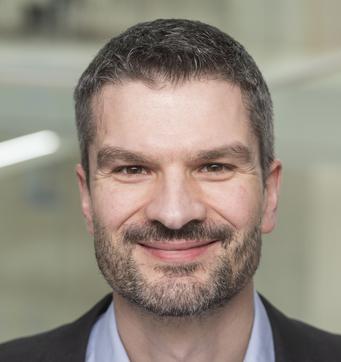
Prof. Dr.-Ing. Nicolaj Stache
Professor of Automotive Measurement and Sensor Technology, Research Professor of Artificial Intelligence, Associate Dean of the School of Engineering, Program Director of Automotive Systems Engineering (ASE), Program Director of the M.S. in Applied Artificial Intelligence (MAAI), Director of the Center for Machine Learning (ZML)
Contact
G112 TechCampus
Max-Planck-Str. 39
74081 Heilbronn

Center for Machine Learning at Heilbronn University (ZML)
The ZML has the mission to strengthen research and teaching in the field of machine learning across faculties. It serves as a focal point for this topic at the university and as a contact point for local companies. The ZML conducts its own research in areas including: Automotive Perception, Neuroscience, and Health Economics. Furthermore, the ZML is actively involved in teaching in various ways.
We would like to thank the Federal Ministry of Education and Research for funding the ZML.


Autonomous Test Vehicle – Research on the Future of Mobility
In my team, we have developed an autonomous test vehicle based on a professionally converted VW Passat. Our research focus is on the perception of the vehicle's environment, particularly using Artificial Intelligence.
Thanks to innovative technologies and extensive sensor systems, the vehicle can demonstrate autonomous sub-functions both on the university campus and on public roads. Many students have actively contributed to this project and have thus gained valuable practical experience in the development of autonomous systems.
Technology and Research
The test vehicle uses the existing in-vehicle actuators to autonomously control the vehicle in longitudinal and lateral directions. For capturing and modeling the environment, both the vehicle's standard sensors and additional sensors are available:
- Three LIDAR sensors on the roof for precise environment detection
- Five cameras for 360° all-round vision
- High-performance computers that process the collected data and enable AI-supported driving strategies
Our research on this test vehicle is continuously ongoing. We are constantly working on the further development of autonomous driving functions and the optimization of perception systems.
We welcome exchanges with interested parties from academia and industry. If you are interested in collaboration, please feel free to contact me!
Students who are enthusiastic about autonomous driving, AI, and sensor technology are also cordially invited to get involved. Whether as part of project and thesis work or as a member of our team – we look forward to new ideas and committed contributors!
Further information can also be found in our virtual AI lab (in the "AI & Mobility" building)
AiAccuAide
The "AiAccuAide" project, conducted at the ZML and funded through investBW, aims to significantly reduce the error rate in battery pack production at ANSMANN AG through the use of artificial intelligence and machine learning. An AI-based system is being developed that analyzes production data, sensor information, and image data to detect and predict errors early during production. An assistance system supports employees in error prevention and correction. Through the digitalization of production, resources are conserved, costs are reduced, and product quality is improved. The project promises economic, ecological, and social benefits, including cost savings, reduced carbon footprint, and improved working conditions. Furthermore, the foundation for a digital twin of battery pack production is being established.


Center for industrial AI (iAI)
The Center for Industrial AI (iAI), funded by the Carl Zeiss Foundation, explores the potential and possibilities of using AI in production processes of medium-sized companies through industrial applications.
The use of AI in production is still challenging for many medium-sized companies. Customized AI solutions are difficult to transfer to other use cases. The setup and operation of AI approaches require deep technical expertise. The center aims to address these issues from a research perspective and specifically support companies in the implementation of Artificial Intelligence (AI).
With the Center for Industrial AI, launched in February 2022, HHN shares its expertise in direct exchange with industry partners. In addition to the exemplary investigated applications, the permanent establishment of the center ensures sustainable knowledge transfer to the region.
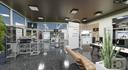
Ansicht des virtuellen KI Labors des Zentrums für Maschinellen Lernens (ZML) der Hochschule Heilbronn
AI Lab at the ZML
The AI Lab at the Center for Machine Learning at Heilbronn University aims to bring Artificial Intelligence from research into operational practice, particularly in areas such as mobility, production, sustainability, and education.
To this end, the lab develops demonstrators, training programs, and knowledge transfer formats targeted at companies, public institutions, students, and the interested public.
Within this AI Lab, I am responsible for the virtual AI Lab, a freely accessible, browser-based 3D environment.
There, AI applications are presented in interactive scenarios, their underlying methods are explained, and potential application areas for companies are demonstrated.
In this way, the virtual AI Lab complements the on-site offerings and makes it possible to explore AI topics independent of time and location.

AI and Cognitive Systems Research Lab
The AI Core Lab was founded in early 2025 in collaboration with colleagues as an innovative workspace for researchers, doctoral candidates, and students. Its focus is on developing artificial intelligence methods for cognitive applications, combining strong theoretical foundations with hands-on, practice-oriented work. A defining feature of the lab is its design as a “living project space,” where research objects and demonstrators are directly integrated into the working environment. This enables an immediate transfer between ideas, development, and real-world application. I am proud to actively help shape and advance this inspiring environment together with my team..

Industrial Projects
Currently ongoing projects primarily focus on machine learning for the interpretation of sensor data in industrial environments and automotive applications. In particular, deep learning - deep neural networks, recurrent networks, and visualization techniques play a major role here.
Typically, the projects are conducted in close coordination between the industrial partner and our team at the university, but are protected from public access by agreement.
If you have a problem whose solution falls within one of my areas of expertise listed above, and you are looking for a partner at the university, I would be very pleased to hear from you.
Book Publications / Book Chapters
Punke, M., Menzel, S., Werthessen, B., Stache, N. C., Höpfl, M.: Automotive Camera (Hardware) In: Handbook of Driver Assistance Systems, Hrsg.: Winner, H., Hakuli, S., Lotz, F., Singer, C., 1. Auflage, Springer Vieweg, Wiesbaden, 2016.
Punke, M., Menzel, S., Werthessen, B., Stache, N. C., Höpfl, M.: Kamerahardware In: Handbuch Fahrerassistenzsysteme, Hrsg.: Winner, H., Hakuli, S., Lotz, F., Singer, C., 3. Auflage, Springer Vieweg, Wiesbaden, 2015.
Stache, N. C.: Konzepte, Algorithmen und Systeme für die bildverarbeitungsgestützte Laserschweißtechnik In: Schriftenreihe des Lehrstuhls für Bildverarbeitung, Hrsg.: Prof. Dr.-Ing. Til Aach, RWTH Aachen University, November 2010.
Journal Articles / Technical Reports
Altmann, M., Ott, P., Stache, N. C., Waldschmidt, C.: Multi-Modal Cross Learning for an FMCW Radar Assisted by Thermal and RGB Cameras to Monitor Gestures and Cooking Processes, In IEEE Access, vol. 9, pp. 22295-22303, 2021, doi: 10.1109/ACCESS.2021.3056878, 2021.
Stache, N. C., Dieckelmann, J., Gedicke, J., Olowinsky, A., Aach, T.: Image-Based Creation and Positioning of Welds for Accelerated Prototyping In: Journal of Laser Applications, vol. 23, 2011. (invited paper)
Stache, N. C., Stollenwerk, A., Gedicke, J., Olowinsky, A., Knepper, A., Aach, T.: Automatic Calibration of a Scanner-Based Laser Welding System In: Journal of Laser Applications, 21(1):10–15, 2009. (invited paper)
Gedicke, J., Stache, N. C.: INTAKT – Innovative Hochgeschwindigkeits- Füge- und Montagezelle für die automatisierte Kleinteilefertigung. In: Abschlussbericht. Fraunhofer Institut für Lasertechnik und RWTH Aachen University, Lehrstuhl für Bildverarbeitung, Juni 2009. Förderkennzeichen BMWi 16IN0383–16IN0384.
Stache, N. C. and Nguyen, T. P.: Automatic Compensation of Workpiece Positioning Tolerances for Precise Laser Welding In: Acta Polytechnica: Journal of Advanced Engineering, 48(3):55–60, 2008. (invited paper)
Patents / Publication Documents
Lasaruk, A., Ruland, T., Sadran, E., Stache, N. C.,: Dynamisches Modell zur Kompensation von Verzeichnungen einer Windschutzscheibe In: Patentschrift des DPMA DE102014219423B4, Anmeldedatum : 25.09.2014, Veröffentlichungsdatum: 21.09.2023.
Baratoff, G., Müller, G. Stache, N. C., Weißmüller, T.: Fahrerassistenzsystem für ein Fahrzeug und ein Verfahren zum Anpassen eines Bildbereichs eines Bildes für ein Fahrerassistenzsystem In: Patentschrift des DPMA, DE102014219422B4, Anmeldedatum: 25.09.2014, Veröffentlichungsdatum: 15.06.2023.
Feldmann, A., Krüger, L., Ruland, T., Schwarz, T., Stache, N. C.: Selbstkalibrierung eines Stereokamerasystems im Auto In: Patentschrift des DPMA, DE102014219428B4, Anmeldedatum: 25.09.2014, Veröffentlichungsdatum:15.06.2023.
Lasaruk, A., Ruland, T., Sadran, E., Stache, N. C.: Dynamisches Modell zur Kompensation von Verzeichnungen einer Windschutzscheibe In: Patentschrift des DPMA, DE102014219423B4, Anmeldedatum: 25.09.2014, Veröffentlichungsdatum:15.06.2023.
Feldmann, A., Giralt, A., Krüger, L., Stache, N. C..: Verfahren zur Stereorektifizierung von Stereokamerabildern und Fahrerassistenzsystem In: Patentschrift des DPMA, DE102014219418B4, Anmeldedatum: 25.09.2014, Veröffentlichungsdatum:23.12.2021.
Baratoff, G., Spruck, J., Stache, N. C., Stein, F.: Verfahren zur Kalibrierung eines Schielwinkels von Einzelbildkameras einer Stereokamera In: Patentschrift des DPMA, DE102014016342B4, Anmeldedatum: 05.11.2014, Veröffentlichungsdatum:14.03.2019.
Stache, N. C.: Verfahren und System zum Bereitstellen eines Kraftfahrzeugs In: Offenlegungsschrift des DPMA, DE102016214414A1, Anmeldedatum: 04.08.2016, Veröffentlichungsdatum: 08.02.2018.
Heinrich, S., Stache, N. C., Stiller, M.: Verfahren und Vorrichtung zur Auswertung eines Eingabewerts in einem Fahrerassistenzsystem, Fahrerassistenzsystem und Testsystem für ein Fahrerassistenzsystem In: Offenlegungsschrift des DPMA, DE102016208076A1, Anmeldedatum: 11.05.2016, Veröffentlichungsdatum: 16.11.2017.
Stache, N. C.: Vorrichtung und Verfahren zur Fahrerassistenz für ein Kraftfahrzeug In: Offenlegungsschrift des DPMA, DE112016000273A5, Anmeldedatum: 30.05.2016, Veröffentlichungsdatum: 12.10.2017.
Grewe, R., Stache, N. C.: Verfahren und Vorrichtung zur Erhöhung der Sicherheit bei einem Überholvorgang eines Kraftfahrzeugs In: Offenlegungsschrift des DPMA, EP000003145776A1, Anmeldedatum: 30.04.2015, Veröffentlichungsdatum: 29.03.2017.
Stache, N. C.: Vorrichtung und Verfahren zur Fahrerassistenz für ein Kraftfahrzeug In: Offenlegungsschrift des DPMA, WO002017005255A1, Anmeldedatum: 30.05.2016, Veröffentlichungsdatum: 12.01.2017.
Stache, N. C.: Vorrichtung und Verfahren zur Fahrerassistenz für ein Kraftfahrzeug In: Offenlegungsschrift des DPMA, DE102015212751A1, Anmeldedatum: 08.07.2015, Veröffentlichungsdatum: 12.01.2017.
Stache, N. C.: Synchronisation einer Belichtung einer Kamera, In: Offenlegungsschrift des DPMA, DE102015212365A1, Anmeldedatum: 02.07.2015, Veröffentlichungsdatum: 05.01.2017.
Grewe, R., Stache, N. C.: Verfahren und Vorrichtung zur Erhöhung der Sicherheit bei einem Überholvorgang eines Fahrzeuges, In: Offenlegungsschrift des DPMA, DE112015001152A5, Anmeldedatum: 30.04.2015, Veröffentlichungsdatum: 22.12.2016.
Stache, N. C.: Verfahren und Vorrichtung zur Erkennung von Objekten in einer Fahrzeugumgebung eines Fahrzeugs In: Offenlegungsschrift des DPMA, DE102015209550A1, Anmeldedatum: 26.05.2015, Veröffentlichungsdatum: 01.12.2016.
Stache, N. C.: Vorrichtung und Verfahren zum gleichzeitigen Kalibrieren einer Mehrzahl von Kameras In: Offenlegungsschrift des DPMA, DE102015205174A1, Anmeldedatum: 23.03.2015, Veröffentlichungsdatum: 29.09.2016.
Stache, N. C.: Verfahren zum Anpassen des Fahrverhaltens eines Fahrzeugs In: Offenlegungsschrift des DPMA, WO002016078654A1, Anmeldedatum: 03.11.2015, Veröffentlichungsdatum: 26.05.2016.
Stache, N. C.: Verfahren zum Anpassen des Fahrverhaltens eines Fahrzeugs In: Offenlegungsschrift des DPMA, DE102014223620A1, Anmeldedatum: 19.11.2014, Veröffentlichungsdatum: 19.05.2016.
Baratoff, G., Spruck, J., Stache, N. C., Stein, F.: Verfahren zur Kalibrierung eines Schielwinkels von Einzelbildkameras einer Stereokamera In: Offenlegungsschrift des DPMA, DE102014016342A1, Anmeldedatum: 05.11.2014, Veröffentlichungsdatum:12.05.2016.
Baratoff, G., Stache, N. C.: Verfahren zum Überwachen einer Rektifizierung von Bildern In: Offenlegungsschrift des DPMA, DE102014221074A1, Anmeldedatum: 16.10.2014, Veröffentlichungsdatum: 21.04.2016.
Feldmann, A., Giralt, A., Krüger, L., Stache, N. C.: Verfahren zur Stereorektifizierung von Stereokamerabildern In: Offenlegungsschrift des DPMA, DE102014219418A1, Anmeldedatum: 25.09.2014, Veröffentlichungsdatum: 31.03.2016.
Baratoff, G., Müller, G., Stache, N. C., Weißmüller, T.: Automatische Kamerasichtfeldanpassung und Synchronisation In: Offenlegungsschrift des DPMA, DE102014219422A1, Anmeldedatum: 25.09.2014, Veröffentlichungsdatum: 31.03.2016.
Lasaruk, A., Ruland, T., Sadran, E., Stache, N. C.: Dynamisches Modell zur Kompensation von Verzeichnungen einer Windschutzscheibe In: Offenlegungsschrift des DPMA, DE102014219423A1 Anmeldedatum: 25.09.2014, Veröffentlichungsdatum: 31.03.2016.
Feldmann, A., Krüger, L., Ruland, T., Schwarz, T., Stache, N. C.: Selbstkalibrierung eines Stereokamerasystems im Auto In: Offenlegungsschrift des DPMA, DE102014219428A1, Anmeldedatum: 25.09.2014, Veröffentlichungsdatum: 31.03.2016.
Grewe, R., Stache, N. C.: Verfahren und Vorrichtung zur Erhöhung der Sicherheit bei einem Überholvorgang eines Fahrzeugs In: Offenlegungsschrift des DPMA, WO002015176723A1 Anmeldedatum: 22.05.2014, Veröffentlichungsdatum: 26.11.2015.
Stache, N. C.: Verfahren und Vorrichtung zur Regelung einer Fahrgeschwindigkeit eines Fahrzeuges In: Offenlegungsschrift des DPMA, DE102014208180A1, Anmeldedatum: 30.04.2014, Veröffentlichungsdatum: 05.11.2015
Alexovski, M., Behrens, A., Fechner, T., Spruck, J., Stache, N. C.: Kamerasystem und Verfahren zum Betrieb eines Kamerasystems In: Offenlegungsschrift des DPMA, DE102013226632A1, Anmeldedatum: 19.12.2013, Veröffentlichungsdatum: 25.06.2015.
Stache, N. C.: Einrichtung zum Sammeln der Kenndaten und zur verbraucherspezifischen Optimierung von Solarzellen. In: Patentschrift des DPMA, DE000019836134B4, Anmeldedatum: 10.08.1998, Veröffentlichungsdatum: 22.04.2004.
Conference Proceedings
Göltl, F., Harst, F., Birkert, A., & Stache, N. C. (2025). Advances in neural network assisted tool pressure prediction. MATEC Web of Conferences, 408, 01041. https://doi.org/10.1051/matecconf/202540801041
Kaftan, P., Lanquillon, C., & Stache, N. C. (2025). AI-supported root cause analysis in automotive quality problem solving: A cross domain literature review. In Artificial Intelligence in HCI (pp. 177–197). Springer Nature Switzerland. https://doi.org/10.1007/978-3-031-93415-5_11
Schoch, F., Graf, P., Schmieg, T., Schloer, N., Wittenberg, C., Lanquillon, C., & Stache, N. C. (2025). Anomaly detection on real-world industrial manufacturing applications with additional anomaly type clustering. In Artificial Intelligence in HCI (pp. 207–219). Springer Nature Switzerland. https://doi.org/10.1007/978-3-031-93429-2_14
Schmieg, T., Schoch, F., Schloer, N., Lanquillon, C., Wittenberg, C., & Stache, N. C. (2025). Enhancing knowledge preservation in machine learning research: Jupyter notebooks as an interactive documentation tool. In HCI International 2025 Posters (pp. 167–175). Springer Nature Switzerland. https://doi.org/10.1007/978-3-031-94168-9_16
Müller, A. T., & Stache, N. C. (2025). Visual instruction as an intuitive interface for robotic sorting. In Artificial Intelligence in HCI (pp. 178–194). Springer Nature Switzerland. https://doi.org/10.1007/978-3-031-93429-2_12
Adam T. Müller, Philipp J. Teuffel, Konstantin Manassis, and Nicolaj C. Stache, "Reducing Experimental Testing in Space Propulsion Film Cooling Analyses by Pixelwise Generative Image Interpolation," in 11th European Conference for Aeronautics and Aerospace Sciences (EUCASS), 2025, doi: 10.13009/EUCASS2025-285
Wu, S., Low, C., Yee, J., Schmieg, T., Manurung, Y., & Stache, N. C. (2025). Locally hosted conversational process mining for production data via graph-based retrieval-augmented generation (GraphRAG). Journal of Mechanical Engineering, 14, 39–59. https://doi.org/10.24191/jmeche.v14i1.5757
Erlewein, H., Müller, A. T., Gerstlauer, L. M., Schneider, A. F., & Stache, N. C. (2025, September). Fusing stereo depth and semantic segmentation for efficient 3D object detection in autonomous driving. In 2025 IEEE International Automated Vehicle Validation Conference (IAVVC) (pp. 1–7). IEEE. https://doi.org/10.1109/iavvc61942.2025.11219504
Harhammer, F., Müller, A. T., Graf, P., & Stache, N. C. (2025, September). Sim-to-real domain adaptation with randomized data for autonomous driving. In 2025 IEEE International Automated Vehicle Validation Conference (IAVVC) (pp. 1–6). IEEE. https://doi.org/10.1109/iavvc61942.2025.11219640
Göltl, F., Zimmermann, P., Birkert, A., & Stache, N. C. (2025, September). Simulation-based automatic tool clearance to reduce the tryout efforts of car body stamping tools. Journal of Physics: Conference Series, 3104(1), 012056. https://doi.org/10.1088/1742-6596/3104/1/012056
Krüger, A., Höhne, J., Schumacher, I., Vögelein, L., Metzger, T., & Stache, N. C. (2025, February). Entwicklung eines maschinellen Gegenspielers für ein hardwarebasiertes Vier-Gewinnt-Spiel. In Menschenzentrierte Automation im digitalen Zeitalter (AALE 2025). Hochschule für Technik, Wirtschaft und Kultur Leipzig. https://doi.org/10.33968/2025.28
Kocsis, M., Hartmann, B., Heinrich, E., Zöllner, R., & Stache, N. C. (2025, February). Erkennung und Zuordnung von Lichtsignalanlagen für autonome Fahrzeuge in urbanen Testsites. In Menschenzentrierte Automation im digitalen Zeitalter (AALE 2025). Hochschule für Technik, Wirtschaft und Kultur Leipzig. https://doi.org/10.33968/2025.17
Kinitzki, V., Wittek, A. R., & Stache, N. C. (2025, February). Virtuelles KI-Labor: Wie VR den Zugang zu KI und deren Anwendungen für verschiedene Zielgruppen erleichtert. In Menschenzentrierte Automation im digitalen Zeitalter (AALE 2025). Hochschule für Technik, Wirtschaft und Kultur Leipzig. https://doi.org/10.33968/2025.11
Schoch, F., Graf, P., Schmieg, T., Wittenberg, C., Lanquillon, C., & Stache, N. C. (2024). Deep anomaly detection with extended Transformer-based model on Tennessee Eastman Process Dataset. In 2024 IEEE 19th International Conference on Computer Science and Information Technologies (CSIT) (pp. 1–4). IEEE.
Wittenberg, C., Boos, S., Harst, F., Lanquillon, C., Ohrnberger, M., Schloer, N., Schoch, F., & Stache, N. C. (2024). Unlocking operational clarity: The integration of artificial intelligence, digital twins, and mixed reality in production for enhanced user transparency. In H. Degen & S. Ntoa (Eds.), Artificial Intelligence in HCI (Vol. 14735, pp. 449–460). Springer Nature Switzerland. https://doi.org/10.1007/978-3-031-60611-3_31
Schloer, N., Boos, S., Harst, F., Lanquillon, C., Ohrnberger, M., Schoch, F., Stache, N. C., & Wittenberg, C. (2024). Optimizing the industrial human-machine interface: Holographic surfaces and their role in anomaly detection. In C. Stephanidis, M. Antona, S. Ntoa, & G. Salvendy (Eds.), HCI International 2024 Posters (Vol. 2120, pp. 430–435). Springer Nature Switzerland. https://doi.org/10.1007/978-3-031-62110-9_47
Kinitzki, V., Ramos Wittek, A., & Stache, N. C. (2024). Knowledge transfer reinvented: A comprehensive exploration of Heilbronn University’s virtual AI laboratory and its impact on interdisciplinary collaboration. In H. Degen & S. Ntoa (Eds.), Artificial Intelligence in HCI (Vol. 14735, pp. 373–386). Springer Nature Switzerland. https://doi.org/10.1007/978-3-031-60611-3_26
Graf, P., Ohrnberger, M., Dötterer, D., & Stache, N. C. (2024). Semi-supervised sorting via deep feature extraction and density based clustering with user feedback. In H. Degen & S. Ntoa (Eds.), Artificial Intelligence in HCI (Vol. 14734, pp. 337–355). Springer Nature Switzerland. https://doi.org/10.1007/978-3-031-60606-9_19
Göltl, F., Birkert, A., Harst, F., & Stache, N. C. (2024). Methodic approach for the simulation-based, elastic die surface compensation by creating a FE-model of the car body press predicated on spotting images via neural networks. IOP Conference Series: Materials Science and Engineering, 012039. https://doi.org/10.1088/1757-899X/1307/1/012039
Schloer, N., Boos, S., Harst, F., Lanquillon, C., Ohrnberger, M., Schoch, F., Stache, N. C., & Wittenberg, C. (2023). Mixed reality user experience von erklärbarer KI und digitalem Zwilling in der Produktion. In Mensch und Computer 2023 – Usability Professionals (pp. 10–18420). Gesellschaft für Informatik e.V. https://dl.gi.de/items/c64f9c57-6677-4641-95b0-50d343d1d741
Hessenthaler, N., Schneider, A. F., & Stache, N. C. (2023). MsSDEdit: Deep learning image enhancement for automated bounding box annotations in automotive monocular camera applications. In 2023 IEEE 97th Vehicular Technology Conference (VTC2023-Spring) (pp. 1–8). IEEE. https://doi.org/10.1109/VTC2023-Spring57618.2023.10200175
Allmendinger, M., Stache, N. C., & Tränkle, F. (2023). Integration of reinforcement learning into fluid control systems. In 2023 IEEE 21st International Conference on Industrial Informatics (INDIN) (pp. 1–6). IEEE. https://doi.org/10.1109/INDIN51400.2023.10217854
Ehemann, M., Tränkle, F., & Stache, N. C. (2023). AI-based cavitation detection in process valves. In 2023 IEEE 21st International Conference on Industrial Informatics (INDIN) (pp. 1–6). IEEE. https://doi.org/10.1109/INDIN51400.2023.10218193
Wittenberg, C., Boos, S., Harst, F., Lanquillon, C., Ohrnberger, M., Schloer, N., Schoch, F., & Stache, N. C. (2023, July). User transparency of artificial intelligence and digital twins in production – Research on lead applications and the transfer to industry. In H. Degen & S. Ntoa (Eds.), Artificial Intelligence in HCI (Vol. 14051, pp. 322–332). Springer Nature Switzerland. https://doi.org/10.1007/978-3-031-35894-4_24
Wittenberg, C., Boos, S., Harst, F., Lanquillon, C., Ohrnberger, M., Schloer, N., Schoch, F., & Stache, N. C. (2023). Künstliche Intelligenz und Digitaler Zwilling in der Produktion – Forschung zu Leitanwendungen und dem Transfer in die Industrie. In Mit Automatisierung gegen den Klimawandel (pp. 323–333). https://htwk-leipzig.qucosa.de/id/qucosa:83966
Bayram, F. S., Pütz, F., Weiß, J., Radtke, R., Jesser, A., & Stache, N. C. (2022). Classification of vulnerable road users based on range-Doppler maps of 77 GHz MIMO radar using different machine learning approaches. In Proceedings of the 6th International Conference on Graphics and Signal Processing (ICGSP '22) (pp. 27–33). ACM. https://doi.org/10.1145/3561518.3561523
Renz, K., Stache, N. C., Fox, N., Varol, G., & Albanie, S. (2021). Sign segmentation with changepoint-modulated pseudo-labeling. In CVPR Workshop, Seattle, WA, USA.
Renz, K., Stache, N. C., Albanie, S., & Varol, G. (2021). Sign language segmentation with temporal convolutional networks. In ICASSP 2021, Toronto, Ontario, Canada.
Altmann, M., Ott, P., Stache, N. C., Kozlov, D., & Waldschmidt, C. (2021). A cognitive FMCW radar to minimize a sequence of range-Doppler measurements. In 17th European Radar Conference (EuRAD), Utrecht, Netherlands.
Zieringer, C., Bauer, B., Stache, N. C., & Wittenberg, C. (2020). Human-robot interaction via a virtual twin and OPC UA. In International Conference on Applied Human Factors and Ergonomics (pp. 101–107). Springer, Cham.
Wittenberg, C., Bauer, B., & Stache, N. C. (2020). A smart factory in a laboratory size for developing and testing innovative human-machine interaction concepts. In T. Ahram & C. Falcão (Eds.), Advances in Usability and User Experience (pp. 160–166). Springer, Cham.
Altmann, M., Ott, P., Stache, N. C., & Waldschmidt, C. (2019). Learning dynamic processes from a range-Doppler map time series with LSTM networks. In Proc. EUMW 2019, Paris, France.
Rempel, W., Bauer, B., Stache, N. C., & Wittenberg, C. (2019). First steps to control a digitalized factory via augmented reality. In Proc. 14th IFAC/IFIP/IFORS/IEA Symposium on Analysis Design and Evaluation of Human–Machine Systems (HMS 2019), Tallinn, Estonia.
Schneider, A., & Stache, N. C. (2019). Towards user identification for autonomous vehicles by an ANN-based face recognition approach. In Proc. AALE Conference, AALE 2019 Autonome und Intelligente Systeme in der Automatisierungstechnik (pp. 33–38).
Reichenbach, A., Schramm, W., & Stache, N. C. (2018). Das Zentrum für Maschinelles Lernen (ZML) an der Hochschule Heilbronn. In Proc. ASIM Workshop (pp. 97–101).
Altmann, M., Ott, P., & Stache, N. C. (2018). Deep learning zur Erkennung von Kochprozessen. In MATLAB Expo, München.
Stache, N. C., Dieckelmann, J., Gedicke, J., Olowinsky, A., & Aach, T. (2009). An image-based “Click & Weld”-method for laser beam positioning in micro welding applications. In Proceedings of the 28th International Congress on the Applications of Lasers and Electro-Optics (ICALEO) (pp. 343–352), Orlando, FL, USA. (2. Preis, ICALEO Student Paper Contest)
Stache, N. C., Dieckelmann, J., Firnich, R., Gedicke, J., Abels, P., Olowinsky, A., & Aach, T. (2008). High speed video-based melt pool surveillance in laser spot welding. In Proceedings of the 27th International Congress on the Applications of Lasers and Electro-Optics (ICALEO), Temecula, CA, USA (pp. 132–139).
Stache, N. C., & Nguyen, T. P. (2008). Precise laser welding by automatic adaptation to the work piece positioning error. In Proceedings of the 12th International Student Conference on Electrical Engineering POSTER, Prague, Czech Republic. (1. Preis)
Stache, N. C., Stollenwerk, A., Gedicke, J., Olowinsky, A., Knepper, A., & Aach, T. (2007). Automatic calibration of a scanner-based laser welding system. In Proceedings of the 26th International Congress on the Applications of Lasers and Electro-Optics (ICALEO), Orlando, FL, USA (pp. 223–229). (1. Preis, ICALEO Student Paper Contest)
Stache, N. C., Zimmer, H., Gedicke, J., Olowinsky, A., & Aach, T. (2007). Robust high-speed melt pool measurements for laser welding with sputter detection capability. In DAGM07: 29th Annual Symposium of the German Association for Pattern Recognition (pp. 476–485), Heidelberg, Germany.
Stache, N. C., & Zimmer, H. (2007). Robust circle fitting in industrial vision for process control of laser welding. In Proceedings of the 11th International Student Conference on Electrical Engineering POSTER, Prague, Czech Republic.
Stache, N. C., Zimmer, H., Gedicke, J., Regaard, B., Olowinsky, A., Knepper, A., & Aach, T. (2006). Approaches for high-speed melt pool detection in laser welding applications. In Vision, Modeling, and Visualization (VMV) (pp. 217–224), Aachen, Germany.
Stache, N. C., Stehle, T. H., Mühlich, M., & Aach, T. (2006). Towards multiple-orientation based tensor invariants for object tracking. In European Signal Processing Conference (Eusipco), Florence, Italy.
Schwann, R., Stache, N. C., & Noll, T. G. (2005). Optimization of frequency dependent receive apodization. In IEEE Ultrasonics Symposium (Vol. 4, pp. 1988–1991).
Presentations, Conference Sessions (Selection)
Stache, N. C.: Invited Talk: Digitalisierung und KI – Was zeichnet sich ab?, DHBW Heilbronn, 22.05.2025.
Stache, N. C.: Invited Talk: Wissenschaft trifft Wirtschaft – Ein Impuls zum Thema KI, Zukunftsformum 2025, IPAI, 18.07.2025. https://youtu.be/cjjTkm_j0kQ?si=wlut4gIL3yuR7sTV
Stache, N. C.: Invited Talk: KI-Labor im Zentrum für Maschinelles Lernen der HHN, VHS Unterland 09.04.2025.
Stache, N. C.: Invited Talk: KI-Labor im Zentrum für Maschinelles Lernen der HHN, VHS Unterland 20.06.2024.
Stache, N. C.: Invited Talk: Digitalisierung und KI – Was zeichnet sich ab?, DHBW Heilbronn, 11.07.2024.
Stache, N. C.: Invited Talk: Entscheidende KI-Trends unserer Zeit, AI-SummerWeek 2024 (online-Veranstaltung), 18.06.2024.
Stache, N. C.: Invited Talk: Zukunftsweisende KI-Trends: Hintergründe, Herausforderungen, Forschungsgebiete; Vortrag auf der Veranstaltungsreihe KI – Mein Wettbewerbsvorteil von morgen, 01.02.2024. https://youtu.be/2B1MWhH8Q00?si=n1KU0nQqHgt0EaSs
Stache, N. C.: Invited Talk: Künstliche Intelligenz – eine Einführung, Vortrag zur Eröffnung der Heilbronner KI-Gespräche, VHS+Stadt Heilbronn, 16.10.2023 https://youtu.be/SL4_mp43zS8?si=XGnoz_6mc8cMURlu
Stache, N. C.: Invited Talk: Das Auto der Zukunft – wie es von alleine fährt und was das für uns bedeutet, Vorlesung für die Kinder-Uni an der HHN, 27.09.2023.
Stache, N. C.: Invited Talk: KI für den Mittelstand – Wegweiser für eine erfolgreiche Umsetzung, Vortag auf der KI für den Mittelstand-Konferenz am IPAI, Heilbronn, 26.05.2023 https://youtu.be/HJ74IXCB0_Y?si=bpDb0bODkzMHX3PG
Stache, N. C.: Invited Talk: KI und neue Technologien – Überblick und Angebote der HHN, Vortrag im Rahmen des Regionaltags der Bundesagentur für Arbeit, Heilbronn. 11.05.2023
Stache, N. C.: Invited Talk: Künstliche Intelligenz im Kontext der industriellen Produktion, Vortrag im Rahmen der Veranstaltungsreihe Recht und KI an der HHN. 09.03.2023
Stache, N. C.: Invited Talk: KI in der industriellen Produktion –Das Center for industrial AI, Rede vor dem Fachbeirat der Fakultät T1 der HHN. 23.11.2022
Stache, N. C.: Invited Talk: KI – Wie funktioniert das, was machen wir damit? Rede zur Eröffnung des Digi-Labs der HHN, 18.11.2022
Stache, N. C.: Invited Talk: Sehende KI, Vortrag auf der Veranstaltung: KI – Mein Wettbewerbsvorteil von morgen. 20.10.2022.
Stache, N. C.: Invited Talk: KI in der industriellen Produktion –Das Center for industrial AI, Präsentation beim Forscherfrühstück in Heilbronn. 27.09.2022
Stache, N. C., Pabst, J.: Invited Talk: Künstliche Intelligenz, Vortrag bei der Veranstaltung: KI – Mein Wettbewerbsvorteil von morgen. 02.06.2022.
Stache, N. C.: Invited Talk: From Simulation to Reality using Reinforcement Learning: Autonomous Driving and other Applied Research at the Center for Machine learning at HHN, 14.09.2021.
Stache, N. C.: Invited Talk: Jufo-Lounge: Automatisiertes Fahren, Heilbronn, 26.05.2021.
Stache, N. C.: Invited Talk: Automatisiertes Fahren, Experimenta SciDay, Heilbronn, 16.12.2020.
Stache, N. C., Session lead: "Machine intelligence – challenges, advancements and future outlook on deep learning and neural networks" Autonomous Machines World, Berlin 1.-2.7.2019.
Stache, N. C.: Invited Talk: Wie lernt KI?, Stuttgarter Zukunftssymposium Ethik und KI, Stuttgart, 23/24.11.2018.
Stache, N. C.: Invited Talk: Deep Learning als Basis der zweiten KI-Welle, Meet the Expert @Ferchau, Heilbronn, 22.10.2018.
Stache, N. C.:, Session lead: „Von Machine Translation bis Computer Vision – Deep Learning mit Tensorflow, Keras, PyTorch, Caffe – Welche Tools sind für welche Anwendungsfälle am besten geeignet?“, I’m AI, Berlin, 16.09. – 18.09.2018.
Schramm, W., Reichenbach, A., Stache, N. C.: Invited Talk: "Maschinelles Lernen – was ist es und warum wird es unsere Zukunft so verändern?", 7. Heilbronner Dialog zur personalisierten Medizin, MolIT, 20.03.2018.
Stache, N. C.: Session lead: „Deep Learning for Automotive“, Conference: Software-Defined Vehicles, Berlin, 28.-29.11.2017.
Stache, N. C.: Short Course lead (pre-conference workshop): “Introduction to Deep Learning”, Auto:AI, Berlin, 27.9.2017.
Stache, N. C.: Session lead: “The Influence of AI on Perception Systems for Automated Driving”, Conference: Cognitive Vehicles, Berlin, 30. – 31.5.2017.
Stache, N. C.: Invited Talk: “Simulation of system and sensor setup designs for automated driving vehicles”, Continental Software Conference, Regensburg, 21.10.2015.
Stache, N. C.: Invited Talk: „Bildgebung, Bildverarbeitung, Software der INTAKT-Fügezelle“, Fraunhofer Institut für Lasertechnik, Aachen, 29.04.2009.
Stache, N. C.: Invited Talk: „Bildverarbeitung in Forschung, Bio-Medizin und Industrie“, Fraunhofer Institut für Lasertechnik, Aachen, 27.03.2006.
Stache, N. C.: Invited Talk: „Frequenzabhängige Empfangsgewichtung zur Verbesserung der Richtcharakteristik in der Ultraschall-Bildgebung“, Forschungszentrum Jülich, 13.09.2005.
Interviews / Presse-Berichte (Auswahl)
Berichterstattung Heilbronner Stimme, Simon Gajer – Künstliche Intelligenz: Wenn an der Hochschule die KI die Schrauben sortiert – 26.05.2025
Berichterstattung Heilbronner Stimme, Simon Gajer – Deepseek und Stargate: KI-Experten aus Heilbronn bewerten neue Konkurrenz – 04.02.2025
Berichterstattung Heilbronner Stimme, Lisa Könnecke – HHN-Professor: „Es ist mir schon lange eine Herzensangelegenheit, KI erklärbar zu machen" – 26.11.2024
Berichterstattung Heilbronner Stimme, Jürgen Paul – KI-Event in Brackenheim: "KI wird die Arbeitswelt verändern" – 01.02.2024
L-TV berichtet über das virtuelle KI-Labor der HHN, 19.01.2024, https://youtu.be/RZNQSkgHO5I?si=5lqgcx14BY6Hd4yW
Berichterstattung Heilbronner Stimme, Wolfgang Müller – Künstliche Intelligenz verarbeitet mehr Daten als je ein Mensch zu Gesicht bekommt – 17.10.2023
Berichterstattung Heilbronner Stimme, Stefanie Sapara – Unterwegs im Auto der Zukunft – 28.09.2023
Berichterstattung Heilbronner Stimme, Simon Gajer – Jahre vor ChatGPT: Dieses Trio etablierte KI an der Hochschule Heilbronn – 31.07.2023
Berichterstattung Heilbronner Stimme, Christian Gleichauf – Was Unternehmen über KI wissen sollten – 20.10.2022
Berichterstattung Heilbronner Stimme, Annika Heffter – Wie unterscheidet sich künstliche von menschlicher Intelligenz? – 12.09.2022
Berichterstattung Heilbronner Stimme, Friedhelm Römer – Erstes Heilbronner KI-Festival findet großen Zuspruch – 16.07.2022
Berichterstattung Heilbronner Stimme, Julian Ruf – Was ist eigentlich künstliche Intelligenz? – 04.06.2022
Berichterstattung Heilbronner Stimme, Maike Skerstins – Tag der Mobilität in Heilbronn - wie werden wir uns in der Zukunft fortbewegen? – 01.06.2022
Interview mit Prozesstechnik TV: Was ist Künstliche Intelligenz? 19.10.2021 https://youtu.be/EFNjYpSylpI
Forschungsnews Hochschule Heilbronn, Jürgen Hartmann, Jan Hartmann, N. C. Stache: "Sichtbare Kooperation - Innovation, Gründung und KI", Forschungsnews 03/2020.
Forschungsnews Hochschule Heilbronn, N. C. Stache, W. Schramm, A. Reichenbach: "Bereit für Episode II - Zentrum für Maschinelles Lernen wird In-Institut der Hochschule Heilbronn", Forschungsnews 02/2020.
Report of Heilbronner Stimme, N. C. Stache: „Sprechstunde bei Doktor KI - Hochschule startet Labor, das Unternehmen beraten soll”, Heilbronner Stimme, 24.01.2020.
Forschungsnews Hochschule Heilbronn, N. C. Stache: "Projekt SALUS: Mehr Sicherheit beim Fahren - Forschung zum Schutz verletzlicher Verkehrsteilnehmer", Forschungsnews 01/2019.
Report of Heilbronner Stimme, N. C. Stache, A. Reichenbach, W. Schramm: „Wenn der Computer selbständig lernt”, Heilbronner Stimme, 24.01.2018.
Interview of ATR World and N. C. Stache, A. Reichenbach: “The visual sense is not enough”, ATR World, ATR International AG, Stuttgart, pp. 37-38, 01.12.2017.
Interview of TU Automotive and N. C. Stache: “Driverless cars could match human understanding”, 03.03.2017, http://analysis.tu-auto.com/autonomous-car/driverless-cars-could-match-human-understanding-0
Interview of Futurelab and N. C. Stache: “How safe are autonomous cars?”, 19.01.2017, http://futurelab.assaabloy.com/en/how-safe-are-autonomous-cars/
Interview of 2025 AD and N. C. Stache: “Reinventing the human brain: How A.I. will revolutionize driverless cars”, 06.05.2016, https://www.2025ad.com/in-the-news/blog/driverless-cars-and-artificial-intelligence/
Bachelor's Courses (Language of Instruction: German):
- Grundlagen der Messtechnik (ASE2, 2 SWS)
- Messtechnik und Sensorik (ASE3, 4 SWS)
- Labor Messtechnik (ASE4, 2 SWS)
- Labor Messtechnik (MB4, 2 SWS)
Bachelor's Courses (taught in English):
- Dynamic Image Processing (ASE7, 2 von 4 SWS)
Master's Courses (taught in English):
- Autonomous Systems: Perception and Situation Understanding (2 von 4 SWS)
- Autonomous Systems: Deep Learning (4 SWS)
I am pleased that students are enthusiastic about my topics and complete work such as seminar papers/project papers, bachelor's theses, master's projects, and master's theses under my supervision.
If you would like to write a thesis with me, please check to what extent your topic or area of interest fits with one of my topics under "Research and Development Projects." Please also read my requirements catalog for student theses in advance (see download on the right side) - you do not need to fill out the form yet, but basic agreement with the requirements should be present.
If both apply, please feel free to contact me by email - we will schedule an appointment. For internal theses, we will then jointly define a topic that is interesting for both you and me. This approach is also the reason why you will find few or no advertised thesis topics from me. Ideally, please also send me your transcript of records in advance.
For external theses, please send me your topic proposal in advance - I will then review whether I can supervise the topic.
Requirements for Student Papers
I am repeatedly asked about requirements / criteria / expectations during preliminary discussions for student theses. I have now compiled these in a catalog that you can download (see link on the right side). Many of your questions are answered there. Once the topic becomes more concrete or your desire to write a thesis with me becomes more concrete, please fill out the form and send it to me signed as a PDF by email.
Nicolaj Stache completed his doctorate in 2010 at RWTH Aachen University with distinction, focusing on industrial image processing. He then held several positions at the automotive supplier Continental in the areas of driver assistance systems, sensor technology, and automated driving. Most recently, he led the “Artificial Intelligence Center,” aiming to make artificial intelligence more effectively applicable in the automotive domain.
Since 2016, he has been a Professor of Measurement Technology and Sensorics at Heilbronn University of Applied Sciences in the “Automotive Systems Engineering” program. Since 2017, he has served as Vice Dean of the Faculty of Engineering (formerly Mechanics and Electronics), heads the study program, and is a co-founder of the Center for Machine Learning (ZML) at the university, which he co-leads with a colleague.
In 2020, he was appointed Research Professor for Artificial Intelligence, and since early 2021, he has been a member of the Baden-Württemberg Doctoral Association (formerly BW-CAR). His research focuses on perception and sensor data interpretation using machine learning methods in industrial application contexts.
Personal passion:
It is the enthusiasm for applying and adapting machine learning tools to new problems in order to achieve better results in less time than would be possible using classical methods.

Use and disclosure of your data
We use tracking technologies (such as cookies and pixels) on our website that enable us to evaluate the behavior of our website visitors and measure our reach. We have also embedded third-party content on our online offering that is based in the USA and does not offer an adequate level of data protection. There is therefore an increased risk for data subjects, as they may not be entitled to any legal remedies. Service providers used may process data for their own purposes and merge it with other data. Details on the purposes of data processing can be found in our privacy policy.
By clicking on the “Accept” button or by selecting individual cookies or services in the settings, you give us your consent to process your data for the respective purposes. Consent is voluntary, is not required for the use of the online offer and can be revoked at any time via our data protection settings. If you confirm the banner with “Decline”, only the necessary cookies will be set on the website that are required for the trouble-free operation of the website and to enable page navigation.