Research & Team
Who’s Behind ISAPS—and What We’re Researching
We are a team of experts in the field of porous media and answer questions about flow and transport through porous media. We see ourselves as a bridge between basic and applied research, and our mission is to translate findings from basic research into practical applications and, in turn, to address the new research questions that arise from this process. We can draw on a network of university partners and industry partners.
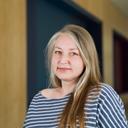
Prof. Dr-Ing. Jennifer Niessner
As a team, we conduct research at the intersection of environment and health. From fine particulate matter to microplastics, we study the transport, deposition, and capture of particles using modern fluid dynamics methods.
Research Question
- How do particles move through fluids and porous structures—and how can they be captured in a targeted manner with minimal energy consumption?
- How can good indoor air quality be achieved while maintaining thermal comfort and minimizing energy consumption?
Methods
Modeling and CFD simulation, test bench design, particle measurement methods
For whom
Filter industry, building services and ventilation industry, environmental associations, society
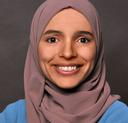
Prof. Dr-Ing. Hermann Koch-Gröber
I’ve been dealing with a topic that affects all of us in our daily lives: Just how clean are the vehicles actually on our roads today? To find out, my team and I measure exhaust emissions directly under real-world driving conditions.

Research Question
- How do emissions from older vehicles in the fleet vary based on measurements from a sample?
- To what extent do operating conditions (e.g., acceleration, inclines) influence emissions?
- What impact do different fuels, such as HVO100, have compared to fossil diesel?
Methods
- PEMS measurements on a 78-km reference route around Heilbronn in accordance with EU RDE (Real Drive Emissions) legislation, as certification is not required
- Targeted inclusion of uphill sections to ensure reproducibility, including through trips using cruise control
For whom
Society and science in interaction
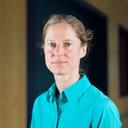
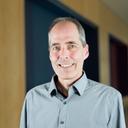
Prof. Dr-rer. nat. Markus Scholle
I'm breaking new ground. We're continuing to advance modeling and simulation to increase efficiency and conserve resources.
Research Question
How can be learn from quantum and Maxwell theory to improve CFD?
Methods
FD, FE, Ritz method, complex variable method, lubrication theory
For whom
University partners, industrial R&D
Research team