
The Research Process
On the Trail of Liselotte Baum
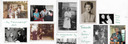
Over the course of several months, members of staff from the Office for Equality and Diversity at Hochschule Heilbronn conducted research into Heilbronn pioneer Liselotte Baum (1922–2015). The aim was not only to trace her professional achievements, but also to bring the woman behind those successes into the light. To this end, conversations were held with family members, companions, contemporary witnesses, and representatives of various institutions, and historical sources were evaluated.
This research produced a multi-layered portrait of a woman who shaped her professional path with expertise, perseverance, and humanity.
We are continually receiving further information about Liselotte Baum as well as new contacts with contemporary witnesses. As a result, this page is still under development and is being regularly updated with new material.
The City Archive as the Starting Point for Research
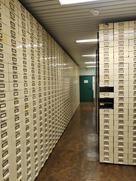
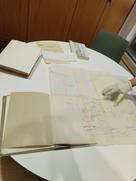
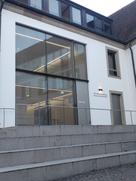
An important starting point for the research was the Stadtarchiv Heilbronn. There, we were given the opportunity to view various holdings relating to Liselotte Baum and to document them photographically.
These included, amongst other things, contemporary historical collections containing press reports and documents relating to her work, historical building records from the former municipal hospital in Heilbronn, and archived personnel files from her time at the Heilbronn clinics. These sources provided valuable insights into her professional career and the public perception of her work.
In addition, we conducted an interview with the director of the city archive, Miriam Eberlein. In it, she explains the functions of a city archive, discusses how the publication series "Heilbronner Köpfe" came about, and sets out why the documentation of local personalities is significant for a city's culture of remembrance.
Klaus Cantzler
Among our conversation partners was Liselotte Baum's second cousin Klaus Cantzler, author of the biographical essay on Liselotte Baum in the eighth volume of the "Heilbronner Köpfe" series.
The 95-year-old took time for an in-depth conversation with us and shared numerous memories of his relative. He described her as a determined yet caring personality who was held in high regard by her colleagues. Alongside her professional career, he spoke of personal memories and made clear how highly Liselotte Baum is still regarded within the family to this day.
His pride in the extraordinary achievements of his relative was especially palpable.
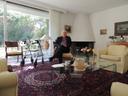
Interview with Klaus Cantzler – second cousin of Liselotte Baum
Interview with Arno Baum – nephew of Liselotte Baum
Excerpt featuring accounts of the working atmosphere in the hospital pharmacy at the municipal hospital, Heilbronn Jägerhaus (in German)
Arno Baum
Her nephew Arno Baum also shared his memories with us, painting a particularly personal picture of his aunt Liselotte Baum.
He spoke of the summer holidays of his childhood, which he often spent with Liselotte Baum. He recalled especially vividly his visits to the Jägerhaus, the hospital of the time with its associated pharmacy where his aunt worked. There, he was allowed to accompany her during her work and gained an insight into the preparation of medicines, ointments, and creams. In his memory, she always appeared in her white lab coat, patiently explaining to him which remedies were used for which ailments.
He also described Liselotte Baum as an inquisitive and dedicated woman who was happy to pass on her specialist knowledge and who taught students. At the same time, he remembered her as a self-assured, tall, and robust personality with an open and down-to-earth manner.
Particularly striking was his account of her deep affinity with Greece. Liselotte Baum spent time there regularly and felt closely connected to the country. Arno Baum himself visited the place his aunt so cherished in the late 1970s. At the time of our interview, he was there again himself.
Rita Hill
Through Klaus Cantzler's introduction, we came to speak with Rita Hill, who had been a close companion of Liselotte Baum for many years. As most of her family did not live in Heilbronn, the Hill family became an important part of her private circle. Liselotte Baum was a regular guest at family celebrations and maintained close contact with the Hills.
Mrs Hill described her as a strong, self-assured personality with a wealth of life experience and many stories from an eventful life. She also spoke of Liselotte Baum's ability to nurture both professional and personal relationships over the long term. Even after her retirement, she maintained close contact with former colleagues and companions, and regularly organised get-togethers.
In addition, Mrs Hill was able to provide valuable pointers to further sources and individuals relevant to the research on Liselotte Baum. Amongst other things, she drew attention to possible personal notes from Liselotte Baum's professional environment, which led us to her long-standing deputy at the hospital pharmacy.
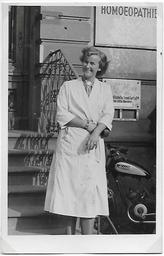
The young pharmacist
Liselotte Baum around 1955 in Frankfurt am Main
Source: Private collection
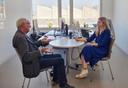
Conversation with Dr Paul-Anton Grathwohl – former colleague of Liselotte Baum at the Heilbronn Clinic
Paul-Anton Grathwohl & Roswitha Löffler
These personal perspectives were complemented by an interview with former clinic staff member Dr Paul-Anton Grathwohl. He knew Liselotte Baum personally and remembered her as a "pharmacist of the old school": professionally skilled, open to conversation, and warmly attentive to people.
His recollections painted the picture of a valued colleague and hostess who combined professional authority with warmth. With a smile, he recalled that anyone who came to see her would quite likely be offered a tot of schnapps by way of greeting.
Through his leads, we were also able to make contact with Roswitha Löffler, who kindly made further materials available to us. These included, amongst other things, the opening speech and the invitation flyer for Liselotte Baum's watercolour exhibition at the "Galerie am Gesundbrunnen" in 2010. These documents provided further valuable insights into her activities after the end of her professional career.
The conversations with family members, companions, and contemporary witnesses paint the portrait of an exceptional woman who combined professional competence, leadership, and human warmth.
Whether as a pharmacist, educator, colleague, or family member: Liselotte Baum left a lasting impression on many people. Their memories reveal why she has remained a formative figure in Heilbronn to this day.
Our Thanks
The research into Liselotte Baum would not have been possible without the support of numerous individuals and institutions.
Our particular thanks go to her family members, former colleagues, and companions who shared their memories with us and gave their time for conversations and interviews.
We would like to express our thanks in particular to Klaus Cantzler, Arno Baum, Rita Hill, Dr Paul-Anton Grathwohl, Roswitha Löffler, Mrs Schwarz, Mrs Schwalb, and Dr Günther Hanke.
We would also like to thank the Stadtarchiv Heilbronn, in particular Miriam Eberlein and her team, as well as colleagues from the Faculty of IT, the Medical Informatics degree programme, the Human Resources department, and the Communications and Marketing department at Hochschule Heilbronn.
Their support made it possible to create the AI portrait of Liselotte Baum.
