
LernCampusNextGen
Rethinking the architecture of teaching and learning.
About the Project
Motivation
Higher education is changing: globalisation, internationalisation and migration are leading to an increasingly diverse student body. Heilbronn University of Applied Sciences is responding to these developments with a structured realignment of study and teaching: a teaching and learning architecture that adapts flexibly to different life situations, prior knowledge and goals. To achieve this, the project is creating one consistent framework instead of many separate solutions.
Project Idea
At the heart of the university-wide project LernCampusNextGen is the vision of a university that enables individual educational pathways and actively embraces the growing diversity of its students.
We are building a modular system of study building blocks, each with a fixed number of ECTS credits. These blocks can be combined into adaptable study pathways that open up several routes to the same degree. The system brings together not only digital and physical learning spaces, but also national and international partners as well as companies.
Goals
- Individual, adaptable study pathways through to graduation
- Cross-faculty combinations as the norm
- International components and partnerships
- Pathways to further learning and professional development (microdegrees)
- Partnerships with businesses and other organisations
- Digital and physical learning environments that enable flexibility
What could LernCampusNextGen look like?
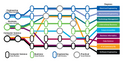
The diagram shows a possible vision for LernCampusNextGen: students start with shared foundational blocks and can then shape the rest of their studies more flexibly and individually. Engineering, business and computer science are no longer seen only as separate degree programmes, but as study blocks that can be combined with one another. This creates different routes through university which – depending on interests, skills profile and career goals – can lead to different degree profiles.
The project is developing the path to get there step by step. We explore together which existing elements can serve as building blocks, where new connections can emerge, and what structures students need to find their way through their studies. The aim is not to replace well-established degree programmes, but to create new possibilities: for individual study pathways, interdisciplinary combinations and greater flexibility to move between subject areas.
LernCampusNextGen is therefore an ongoing development process. The aim is a learning and study architecture that can respond more flexibly to diverse educational backgrounds, interests and future demands. The image highlights a possible direction for the future: towards a campus where students do not simply follow a fixed path but actively shape their own learning journey.
News
- Digital Guidance
- Implementation
- Workshops
- Practical Test
- International Exchange
- Looking Back
AI chatbot StudiAssist launches on HHN’s study programme pages
July 2026
Since 21 July, the AI-powered chatbot StudiAssist has been available on Heilbronn University of Applied Sciences’ study programme pages. Prospective students can use it to quickly and easily ask questions about HHN’s study offerings and receive initial guidance on degree programmes, study options, and other study-related topics.
The introduction of StudiAssist is part of the LernCampusNextGen project. As more flexible study options are developed, the need for clear and accessible guidance grows. This makes StudiAssist a way to explore how AI-powered information services can effectively support students in navigating their study options.
The chatbot draws exclusively on selected information provided by the university. This is intended to ensure reliable and transparent answers to study-related questions. StudiAssist does not replace personal advice, but it can be a first point of contact that makes information easier to access.
StudiAssist is initially being introduced as a pilot. This will provide insights into how the service is received and the extent to which an AI-powered chatbot can support users in navigating their options. The findings will contribute to the further development of digital support services for prospective and current students.

Hybrid technology: roll-out begins at three locations
July 2026
LernCampusNextGen has reached another important milestone: this year, new hybrid technology will be installed in three rooms – one each in Künzelsau, Schwäbisch Hall and at the Bildungscampus.
The order has now been placed, and installation is scheduled for the semester breaks.
This is a very tangible benefit of the project. The new equipment will make it easier to test and develop hybrid formats for teaching, advising and exchange. Especially at a university with four locations, technology like this can help create new connections, cut travel time and make collaboration more flexible
The aim is not fundamentally transform teaching or to replace in-person formats. Rather, the goal is to create additional options: for events with remote participants, cross-campus collaboration, information and advisory services, and flexible study models that better accommodate different life circumstances and educational pathways in the future.
With the expansion of hybrid technology, the participating departments can now explore firsthand which formats work well, where organisational or technical support is needed, and what opportunities this creates for teaching and learning. This allows LernCampusNextGen to take shape in practice, step by step.

Workshops in the faculties: working together towards the first Flex degree programmes
June 2026
Workshops are currently taking place across all faculties. Facilitated by the project team, the sessions introduce the modular system concept and explore potential pathways towards the first flexible degree programmes. The focus is not only on providing information but, above all, on fostering dialogue: What opportunities does the model offer for each faculty? What questions, requirements and framework conditions need to be clarified? And where could the first degree programmes be developed to allow for greater flexibility?
Together with the faculties, the project team is exploring whether and how they would like to contribute to the first flexible degree programmes. This involves taking a realistic look at existing structures, subject-specific profiles and potential development pathways.
Hybrid test room at TechCampus: putting the technology to the test
May/June 2026
In a seminar room at TechCampus, we are currently testing technical options for hybrid teaching, working and exchange formats. As part of our “Campus Life Omnichannel” work package, we have installed a ceiling microphone and a tracking camera, among other things to explore how the technology performs in everyday use.
The focus is not so much on creating a fully equipped model room, but rather on addressing a practical question: What is needed to ensure that hybrid settings work reliably from a technical perspective?
The test room helps us to identify what challenges may arise in everyday use. These include usability, on-site support, rapid resolving issues and coordination with external service providers. Knowing who to contact when technical issues arise is also important: Who provides support, when is it available, how quickly can issues be resolved, and what expertise is available?
This makes G216 a learning and testing space in the truest sense. The insights gained there will feed into the ongoing work of LernCampusNextGen and help us better understand the technical and organisational requirements for implementing hybrid formats at Heilbronn University of Applied Sciences.
Inspiration from Zwolle: LernCampusNextGen visits Windesheim
19–21 May 2026
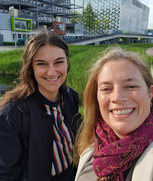
In May, Veronica Quandt and Marcella Dillig from the project team visited Windesheim University of Applied Sciences in Zwolle. They gained fascinating insights into a higher education model that consistently combines flexible study structures, project-based learning and close personal collaboration. What impressed them most? The modular ICT curriculum and the transparent approach to feedback, study progress and artificial intelligence. The visit highlighted how practical and collaborative teaching can be.
The visit provided valuable ideas for our project, particularly regarding modular building blocks, feedback formats and the design of new learning architectures. It also helped strengthen international connections and initiate potential collaborations. The visit to Zwolle demonstrated how inspiring it can be to look beyond institutional and national borders.
Intensive exchange in Schöntal: the project continues to take shape
2–3 March 2026
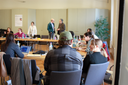
In March, the LernCampusNextGen project team gathered for a large-scale workshop atBildungshaus Kloster Schöntal. Over two intensive days, the focus was on key questions of the project: How can study building blocks be designed? What flexible study pathways are possible? And what framework conditions are needed to successfully establish a new learning and study architecture at Heilbronn University?
Once again, a project of this scale highlighted how many people are contributing to its development with great dedication, in-depth expertise and a constructive, open-minded attitude.
Through working sessions, discussions and joint reflections, ideas were sharpened, open questions identified and next steps defined. Alongside the substantive discussions, the workshop also provided an opportunity to gain a better understanding of the connections between faculties, work packages and project areas, further strengthening a shared understanding ofLernCampusNextGen.
The workshop made it clear thatLernCampusNextGen is not a ready-made solution, but a collaborative development process. The gathering in Schöntal marked an important milestone along the way.
Contact
Interested in LernCampusNextGen?
Whether you have questions about the model, work packages, participation formats or potential collaborations, we will forward your enquiry to the right contact.
Email: lerncampusnextgen@hs-heilbronn.de
Funded by

LernCampusNextGen is an individual project of Heilbronn University of Applied Sciences, funded by the Foundation for Innovation in Higher Education (Stiftung Innovation in der Hochschullehre) as part of its “Lehrarchitektur” (Teaching Architecture) funding programme.
